
India’s energy demand has been rising rapidly over the past decade. With growing cities, expanding industries, and increasing use of electricity in homes, the pressure on the power sector is stronger than ever. While coal still plays a major role in electricity generation, the country is steadily shifting towards cleaner and renewable sources. In this context, an innovative idea called floatovoltaics, or floating solar power systems, is gaining attention.
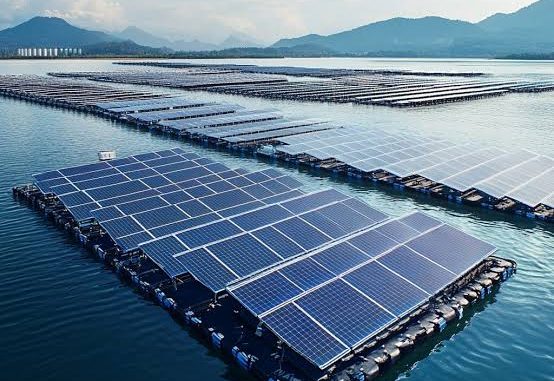
Floatovoltaics refer to solar panels installed on water bodies such as reservoirs, lakes, irrigation ponds, and even wastewater treatment plants. Instead of occupying valuable land, these systems float on specially designed platforms that keep the panels stable on water. The basic working principle remains the same as traditional solar farms, but the location and design offer several added advantages.
One of the key benefits is improved efficiency. Water naturally cools the solar panels, helping them perform better, especially in hot climates like India. At the same time, covering parts of water surfaces reduces evaporation, which is especially useful in regions facing water scarcity. This dual benefit of energy generation and water conservation makes the concept particularly relevant for Indian conditions.
India already has a strong base for solar energy, with large projects like those in Gujarat, Rajasthan, and Madhya Pradesh. Floating solar plants are also slowly emerging, such as installations on reservoirs and hydroelectric dams in states like Kerala, Telangana, and West Bengal. These projects show how India is experimenting with new ways to expand renewable energy without putting additional pressure on agricultural or urban land.
However, floatovoltaics are still at an early stage in India. There are challenges related to installation costs, long-term durability, and maintenance in changing weather conditions, especially during monsoons and storms. Connecting floating systems to the main power grid also requires careful engineering and planning. Environmental impacts on aquatic ecosystems must also be studied to ensure that fish and water quality are not affected.
Even with these challenges, experts believe floating solar has strong potential as a supporting technology rather than a complete replacement for land-based solar farms. India’s vast network of dams, irrigation canals, and reservoirs offers significant space that can be used for such systems in the future.
If developed carefully, floatovoltaics can become an important part of India’s renewable energy journey. By combining innovation with sustainable planning, India can move closer to its clean energy goals while making better use of its existing natural resources.
Matter referenced from:
Shriya Surti. 2026. Are Floatvoltaics The Next Big Thing in Renewable Energy? https://emagazine.com/are-floatvotaics-the-next-big-thing-in-renewable-energy/
By: Dr. Bhawana Asnani.
Happy to see Reviews, Additions, Suggestions and Comments, further.
