
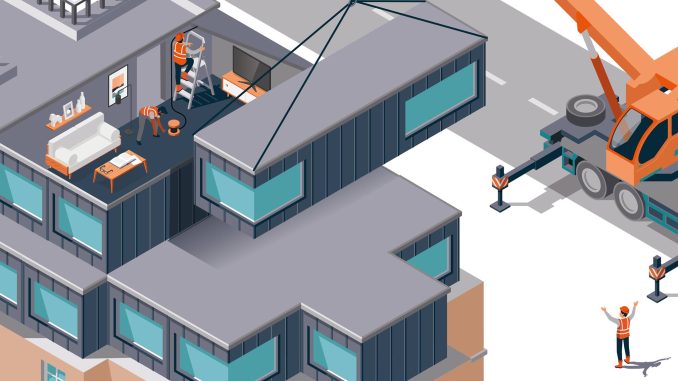
Automated modular construction (AMC) is an advanced building technique in which the majority of a structure is manufactured off-site under controlled factory conditions and later transported to the site for final assembly. Unlike traditional construction-where every stage must be carried out step by step at the building location- AMC allows pre-engineered modules to be fabricated simultaneously and then pieced together like building blocks. This reduces on-site labor requirements, accelerates timelines, and ensures consistency.
The major distinction between standard modular construction and AMC lies in automation. While modular construction relies primarily on manual prefabrication, AMC integrates robotic arms, 3D printing, computer-aided design (CAD), and automated quality-control systems. These technologies not only boost production speed but also minimize human error, reduce material wastage, and improve worker safety by limiting exposure to hazardous environments.
Why AMC is Gaining Ground
In recent years, AMC has become a strong trend across the global construction industry. Its popularity is driven by multiple factors:
- Cost-Effectiveness: Factory production reduces labor costs, procurement delays, and material losses. Many companies report savings of 20–30% compared to conventional building.
- Space Optimization: Since construction happens largely off-site, projects demand less land usage and cause fewer disruptions at the actual building location.
- Time Efficiency: Parallel manufacturing of modules allows buildings to be completed 30–50% faster. For clients, this means reduced waiting times and quicker returns on investment.
- Customization and Scalability: Advanced design software allows AMC structures to be tailored to client needs while maintaining the efficiency of mass production.
Quality and Design Flexibility
Beyond cost and speed, AMC enhances quality. Structures are produced in climate-controlled facilities where humidity, temperature, and dust levels can be regulated. This ensures high precision in finishing, fewer defects, and compliance with strict cleanliness or ISO-class standards—particularly important for hospitals, laboratories, or food-processing units.
Moreover, AMC offers design flexibility. Modules can be modified, expanded, or even relocated with relative ease. For instance, a school built with AMC modules can later add extra classrooms without disrupting existing operations. Similarly, office buildings constructed with modular components can be reconfigured as businesses grow or relocate.
Environmental Benefits
One of AMC’s strongest selling points is sustainability. Studies indicate that AMC can reduce construction waste by up to 90%, thanks to precise material cutting, recycling practices, and reduced packaging. Shorter construction times also mean less machinery operation on-site, lowering fuel consumption and greenhouse gas emissions.
Additionally, AMC buildings often achieve higher energy efficiency. Factory-built modules enable better insulation and airtight construction, which translates into lower heating and cooling demands. As Charlotte Weigel from the Northeast Energy Efficiency Partnerships notes: “The better air sealing you get, the less heating and cooling losses you have, the less energy you use, the less emissions you have from operations of the building.”
Environmental benefits extend beyond energy use. By reducing noise, dust, and site disturbance, AMC also helps preserve local ecosystems and minimizes community disruptions.
Real-World Applications
AMC is already being adopted worldwide across different sectors:
- Residential Housing: Quick, affordable homes for urban families or disaster-relief shelters.
- Healthcare Facilities: Modular hospitals and clinics can be rapidly deployed in emergencies, as seen during the COVID-19 pandemic.
- Commercial Spaces: Offices, retail outlets, and hotels benefit from quick construction with minimal downtime.
- Public Infrastructure: Schools, dormitories, and government buildings use AMC for cost savings and scalability.
Looking Ahead
As urbanization accelerates and the demand for sustainable housing rises, AMC is expected to play a pivotal role in shaping the future of construction. Reports suggest that the global modular construction market could surpass USD 200 billion by 2030, with automation being the driving force.
For homeowners, developers, and policymakers, AMC represents a triple win: it saves time and money, improves quality, and reduces environmental impact. By choosing AMC and spreading awareness of its benefits—we can collectively move toward a greener, faster, and smarter construction industry.
By: Dr. Bhawana Asnani.
Happy to see Reviews, Additions, Suggestions and Comments, further.
