
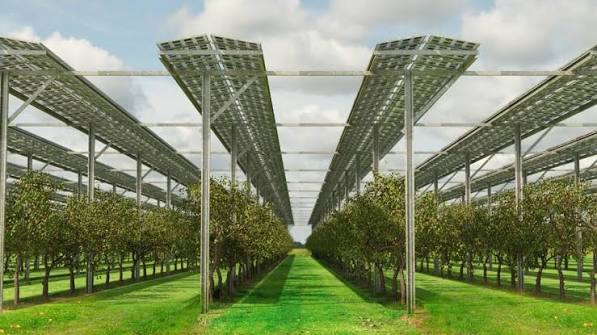
Modern agriculture is highly dependent on natural resources, particularly water and energy. At the same time, farming activities contribute substantially to global greenhouse gas emissions. With the world’s population continuing to rise, ensuring adequate food production while protecting environmental resources has become a major challenge. Agrivoltaics, an innovative approach that combines solar power generation with agricultural production on the same land, offers a promising solution.
Agrivoltaic systems are designed to maximize land productivity by enabling the simultaneous cultivation of crops and generation of renewable energy. Solar panels installed above or around crop fields create partial shade that shields plants from excessive heat, intense sunlight, and adverse weather conditions. This protective environment can improve crop performance and reduce stress on plants. In return, vegetation beneath the panels cools the surrounding area, enhancing the efficiency of solar energy production.
The dual-use system provides multiple environmental and economic benefits. Electricity generated from solar panels can operate irrigation systems, agricultural machinery, and other farm activities. Surplus energy may be stored in batteries or supplied to the electricity grid, creating an additional source of income for farmers. By reducing dependence on fossil fuels, agrivoltaics also helps decrease carbon emissions associated with agricultural operations.
Another important advantage of agrivoltaics is its contribution to climate resilience and resource conservation. The moderated microclimate under solar panels reduces water loss through evaporation and prevents crops from experiencing excessive solar radiation. Consequently, these systems support efficient water use and improve the sustainability of farming practices in regions facing increasing climatic uncertainties.
Despite its considerable potential, agrivoltaics faces certain challenges. The installation of solar infrastructure requires substantial initial investment, and farmers may need technical training to effectively manage integrated farming-energy systems. However, the long-term benefits often outweigh these limitations. Studies indicate that combining agriculture with solar installations can significantly improve land-use efficiency and substantially increase overall farm productivity.
The growing global interest in renewable energy and sustainable food systems is accelerating the adoption of agrivoltaics. Governments, research institutions, and policymakers are increasingly promoting this integrated approach through research initiatives and supportive policies. By simultaneously addressing food security, clean energy production, and environmental conservation, agrivoltaics is emerging as a transformative strategy for the future of sustainable agriculture.
Matter referenced from:
Marium Zahra. 2026. Are Agrivoltaics the Future of Sustainable Agriculture? https://emagazine.com/are-agrivoltaics-the-future-of-sustainable-agriculture/
By: Dr. Bhawana Asnani.
Happy to see Reviews, Additions, Suggestions and Comments, further.
