
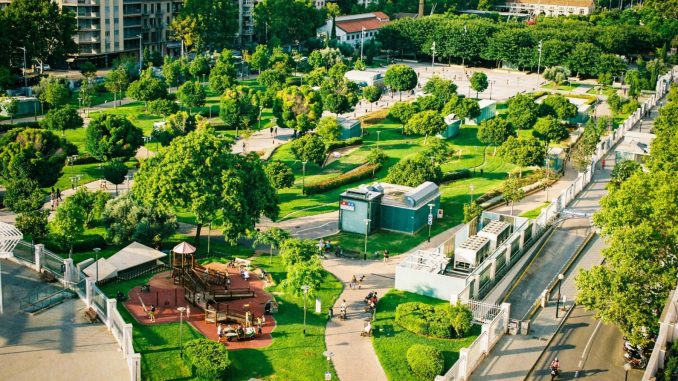
As global warming intensifies, cities worldwide are heating up faster than their rural surroundings. This phenomenon—known as the urban heat island (UHI) effect, occurs because dense concentrations of buildings, roads, and other hard infrastructure absorb and re-emit heat far more than natural landscapes. The consequences are serious: higher urban temperatures increase health risks such as heatstroke, worsen air pollution, drive up energy demand for cooling, and undermine the livability of cities. Addressing UHI is therefore critical in the broader fight against climate change.
Green Infrastructure: Nature as a Cooling Ally
Expanding green infrastructure is one of the most effective strategies for urban cooling. Parks, tree-lined streets, vertical gardens, and green roofs provide shade while reducing temperatures through evapotranspiration, the natural process by which plants release water into the air and cool their surroundings. Studies show that urban green spaces can reduce local air temperatures by several degrees, creating cooler microclimates and improving air quality while enhancing biodiversity.
Reflective and Cool Roofs: Turning Heat Away
Another powerful intervention is the use of reflective and cool roofs. White roofs, capable of reflecting up to 90% of sunlight, greatly reduce heat absorption by buildings, easing the strain on cooling systems. Cool roofs, made from reflective coatings, tiles, or membranes, offer similar benefits and are now used in cities around the world. These technologies not only help lower outdoor air temperatures but also reduce indoor cooling needs, cutting both energy use and greenhouse gas emissions.
Smarter Urban Surfaces and Designs
Urban design is equally crucial in tackling UHI. Cool pavements, constructed with reflective or permeable materials, absorb less heat than traditional asphalt and concrete. Cities like Los Angeles have already piloted cool pavements, reporting promising drops in surface temperatures. Meanwhile, smart shading systems that adjust automatically to the sun’s angle, and other emerging technologies, are making urban cooling more dynamic and efficient. Urban climate modeling further strengthens these efforts by enabling planners to simulate and compare heat-mitigation strategies before implementation.
Lessons from Global Cities
Several global cities offer inspiring examples of UHI mitigation in action. Singapore’s green roof and vertical garden initiatives have transformed its skyline into a model of urban greening, significantly lowering local heat levels. Melbourne’s Urban Forest Strategy, which aims to double the city’s tree canopy cover, has already shown measurable cooling effects and improved livability. Such case studies highlight that coordinated planning, investment, and community engagement can yield real results.
A Call for Resilient Cities
Mitigating urban heat requires a multi-faceted approach, combining nature-based solutions, technological innovation, and thoughtful urban planning. As climate change accelerates, the stakes are high: protecting public health, reducing energy demand, and ensuring cities remain livable for future generations. Policymakers, planners, and communities must act together to create cooler, greener, and more resilient urban environments.
By: Dr. Bhawana Asnani.
Happy to see Reviews, Additions, Suggestions and Comments, further.
