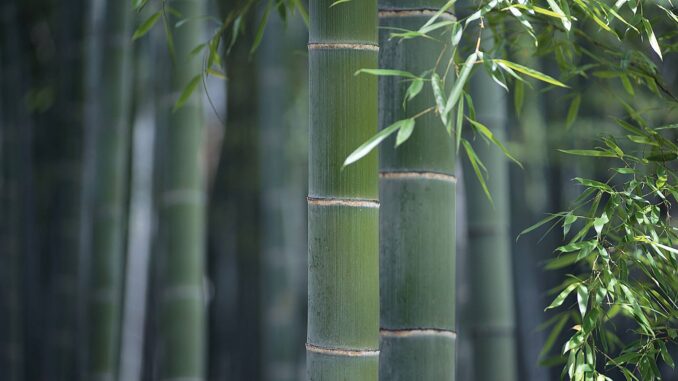
Bamboo, one of the fastest-growing plants on Earth, has long been recognized for its traditional use in rudimentary construction. From scaffolding to rural dwellings, it has served as a functional, affordable material for centuries. However, in recent years, a growing number of architects, engineers, and environmental advocates have championed bamboo as a viable solution for modern, sustainable construction. As the building industry grapples with its significant carbon footprint, bamboo offers a promising alternative to conventional materials like concrete and steel, combining environmental resilience with economic potential.
Despite common misconceptions, bamboo is not a tree but a type of grass, which gives it a unique advantage in sustainability. Unlike trees that often die upon harvest and can take decades to mature, bamboo regenerates rapidly from its root system. This allows it to be harvested without killing the plant, making it a virtually inexhaustible renewable resource. Certain species of bamboo can grow up to three feet per day, enabling swift replenishment and continuous yield. Beyond its renewability, bamboo possesses impressive mechanical properties. It boasts compressive strength exceeding that of concrete and tensile strength comparable to steel, making it not only sustainable but structurally viable for load-bearing applications. These characteristics make it an ideal candidate for replacing high-emission materials in many construction contexts.
Bamboo’s role in combating climate change extends beyond its structural capabilities. Like all plants, bamboo absorbs carbon dioxide (CO₂) during photosynthesis, removing this key greenhouse gas from the atmosphere. What sets bamboo apart, however, is the volume of carbon it can sequester and retain. Researchers have found that every cubic meter of processed bamboo used in construction can store up to 187 kilograms of CO₂ over its lifecycle. When incorporated into long-term infrastructure, bamboo functions as a durable carbon sink, locking away emissions for decades. It’s a great way of taking carbon out of the environment and making sure it doesn’t get re-released. The idea of bio-based materials where we are capturing carbon and locking it up in a building—that has to be the way forward.While many timber products emit carbon during processing—offsetting their carbon-capture potential—bamboo performs differently. Dutch researchers have demonstrated that the lifecycle carbon footprint of engineered bamboo products, such as flattened bamboo panels, is not just low—it’s net-negative.
Despite its many advantages, bamboo is not without challenges. As Matthews notes, it is susceptible to fungal and insect damage, requiring treatments or advanced engineering to ensure durability. To address these concerns, researchers and developers are producing laminated and composite bamboo products—materials made from compressed, resin-bonded bamboo fibers that are more resistant to biological degradation. These innovations are rapidly expanding bamboo’s applications in modern architecture. Many organizations have recognized bamboo’s potential and are supporting initiatives to integrate it into reforestation and climate mitigation strategies. By planting bamboo on degraded lands, these projects not only sequester carbon but also restore ecosystems, prevent erosion, and provide economic opportunities for local communities.
As the world shifts toward greener alternatives, bamboo emerges not just as a symbol of sustainability, but as a practical, scalable solution for the future of construction. With its extraordinary growth rate, regenerative nature, structural integrity, and carbon-sequestering ability, bamboo is uniquely positioned to help build a climate-resilient future—literally from the ground up.
By: Dr. Bhawana Asnani.
Happy to see Reviews, Additions, Suggestions and Comments, further.
